
Summary: Interview with René Zuiderveld
The following is a summary of the interview with photographer René Zuiderveld, reflecting on his 20-year career and the release of his retrospective photo book.
1. Health and the Motivation for the Book
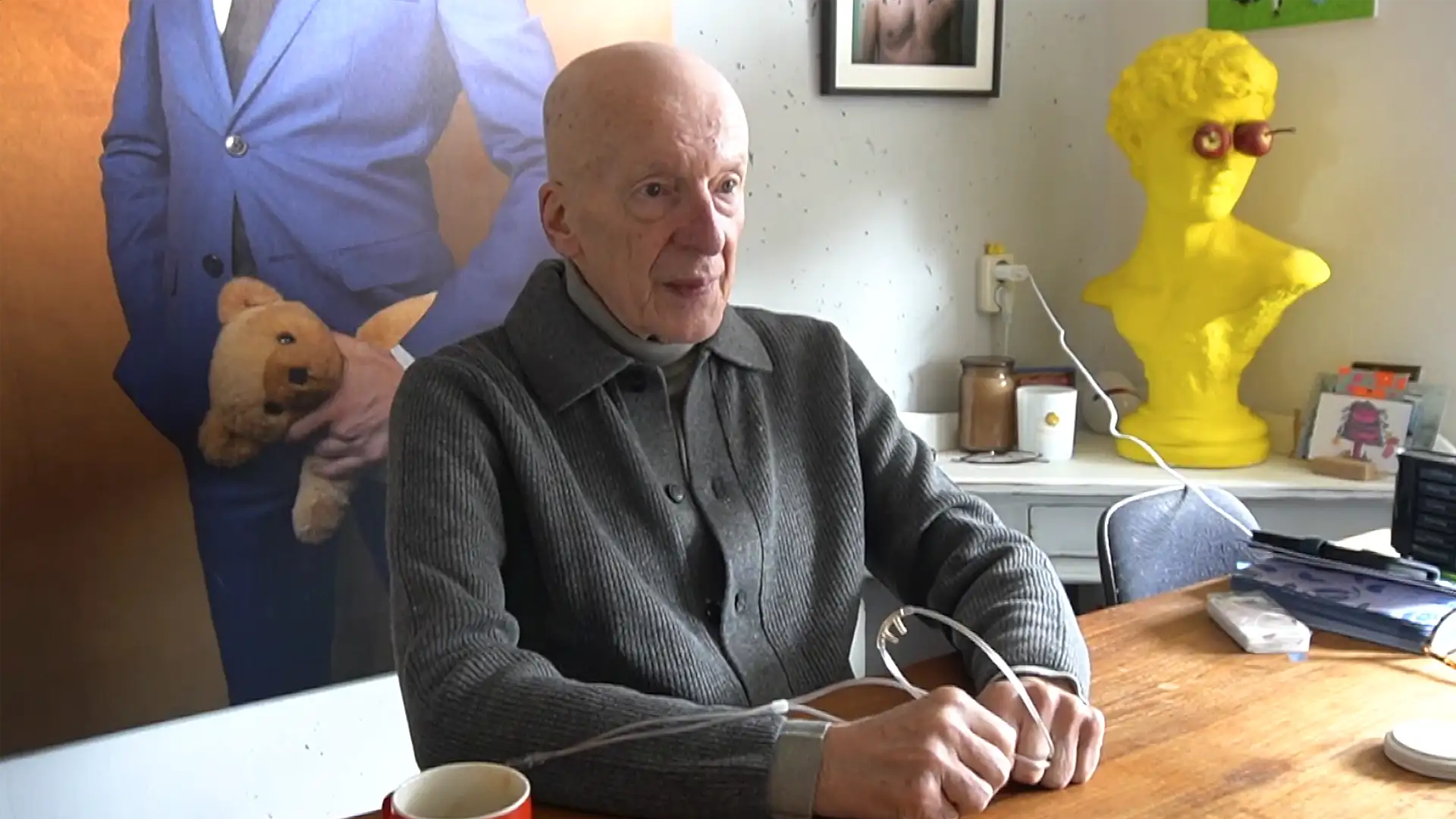
René explains that he is seriously ill, living with only 28% lung capacity. This is likely residual damage from chemotherapy treatments he underwent 20 years ago. Because he is physically unable to conduct new photo sessions, he decided to collaborate with friends to compile his archive of the past two decades into a book. He is supported in his daily life by a close-knit network of friends and caregivers.
2. Artistic Style and Subjects
While his work is often associated with the leather and fetish scene, René emphasizes that the book is far more diverse than just one niche.
- Models: He rarely recruited people; most models reached out to him personally to be part of his work.
- Locations: Many photos were shot in his small, black-painted home studio (3×3 meters), but he also utilized various locations such as a dentist’s office, a cow stable in Friesland, and public spaces like Antwerp Station or the Amsterdam Forest.
- Themes: The work ranges from “innocent,” colorful imagery to more explicit and theatrical photos, sometimes featuring religious symbols like rosaries or horror elements.
3. The Vision Behind the Book
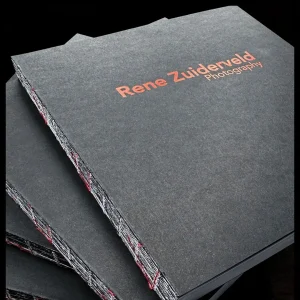
René chose to self-publish the book to maintain full artistic freedom and avoid any form of censorship from mainstream publishers.
-
No Text: He intentionally included no text or explanations in the book; he wants the viewer to use their own imagination when looking at the images.
- Atmosphere over Person: He believes it is important for fetish-related photography to often remain “impersona
l” (where the model does not look directly at the camera) to keep the focus on the fantasy and mood rather than the individual.
4. History and Pride
René only began photography as a form of “therapeutic movement” after his first cancer diagnosis. He also played a significant role in Zandvoort Pride, where he curated exhibitions and displayed his own work for eight years.
Interested in a copy of his book? Get in touch with us!
“I view this book as my life’s journey and I am immensely proud of the result.”
The original interview was uploaded by Menne Vellinga and provides a deep dive into the legacy of one of the scene’s most dedicated photographers.